 Skip to content

Forno Roma: un viaggio tra grani antichi e ricerca artigianale
Per raggiungere la qualità che caratterizza oggi l’offerta del forno Deroma è stata necessaria una lunga e attenta ricerca. Per oltre un anno, prima dell’apertura nel 2021, si è studiato e sperimentato senza sosta. Il progetto si basa su un laboratorio artigianale in costante evoluzione. La produzione del forno Roma si divide tra i locali del gruppo: al Gran Deroma l’attività si concentra sia sulla panificazione che sulla pizza alla pala, mentre al Deroma il forno è interamente dedicato alla pizza alla pala. Qui la ricerca della ricetta perfetta non si ferma mai: non si tratta di un’offerta statica, ma di un percorso che continua ad affinarsi nel tempo attraverso l’esperienza e la manualità.
What are the secrets behind the quality of Deroma’s bakery?
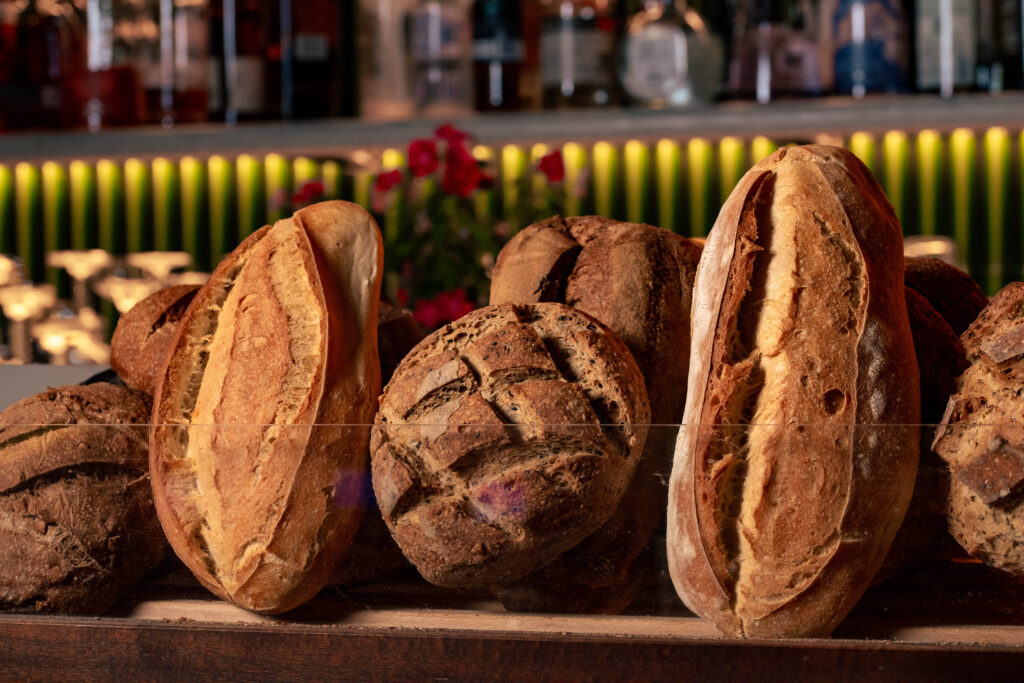
The selection of flour is guided neither by famous mills nor by well-known brands, but solely by technical performance and flavour. At Deroma, the priority is clear: only Italian-grown wheat is used. Every day, between twelve and thirteen different flours are carefully blended to create unique flour blends. Among the bakery’s signature creations, the iconic red pizza alla pala stands out for its crisp texture, a hallmark of the city’s baking tradition. Bread production revolves around four core varieties: white, wholemeal, multigrain and walnut. Starting from those bases, a wide range of products is created, from traditional rosetta to soft milk breads. Production follows daily demand, staying true to the longstanding traditions of the Italian baker.
The Craft of Breadmaking: Technique and Warmth of The Bakery
The distinctive aroma of Deroma’s baked goods is the result of meticulous control over hydration and temperature. Bread is made exclusively with a family sourdough starter and naturally fermented at room temperature, while pizza alla pala is prepared using fresh yeast. The baking technique draws inspiration from the traditional cottura in calata—a slow, even baking method. Although relying on modern four-deck electric ovens, the same natural temperature variation of traditional wood-fired baking is carefully recreated. The bakery’s rhythm mirrors the rhythm of the day: mornings are dedicated to breadmaking, while from the afternoon the ovens focus almost entirely on pizza alla pala, ensuring it is always served freshly baked.
What Is the Difference Between a Baker and a Breadmaker?
The Future of the Bakery: Control, Ethics and Innovation
At Deroma, there is no distinction but a fusion of roles between the baker who prepares the dough and the baker who oversees the baking process. The same skilled artisan follows every stage of production, ensuring complete control over quality. Another defining feature of the Deroma bakery is the absence of sales intermediaries: bread goes straight from the oven to the customer, allowing guests to purchase it directly from the people who made it. Looking ahead, the bakery continues to evolve with an increasing focus on sustainability, using sustainably sourced ingredients and reducing waste throughout the production process. Innovation remains central to Deroma’s philosophy. Having established a distinctive identity through its bread and pizza alla pala, the next challenge is the creation of a signature Deroma sandwich—one that combines craftsmanship and environmental responsibility, with the ambition of becoming a new benchmark in Rome’s gastronomic scene.